

When you compare nicotine pouches, nicotine strength and flavor usually get most of the attention. Pouch format is often treated as a minor detail — something you think about only after deciding whether you want mint, wintergreen or some fruit flavor that sounds suspiciously like an energy drink.
In practice, the size, shape and moisture level of a pouch can have a major effect on how it feels and performs. A small pouch may sit almost invisibly under your lip and provide relatively quick satisfaction. A larger pouch may feel more substantial, but the additional filler can help the nicotine and flavor last much longer.
There are four main pouch formats that you may encounter: mini, slim, regular and maxi. The exact definitions vary between manufacturers, though, and pouch companies have never been especially interested in making comparison shopping easy.
So, what do the different types of nicotine pouches actually mean? What are the different formats, and what are manufacturers talking about when they say their pouches are “moist” or “dry?” Let’s dig in.
Table of Contents
- Nicotine Pouch Formats at a Glance
- Mini Nicotine Pouches
- Slim Nicotine Pouches
- Regular Nicotine Pouches
- Maxi Nicotine Pouches
- Moist vs. Dry Nicotine Pouches
- What Are pH Adjusters in Nicotine Pouches?
- What Really Controls Nicotine Release?
- Milligrams per Pouch vs. Milligrams vs. Gram
- Which Nicotine Pouch Format Should You Choose?
- FAQ
- Final Thoughts
Nicotine Pouch Formats at a Glance
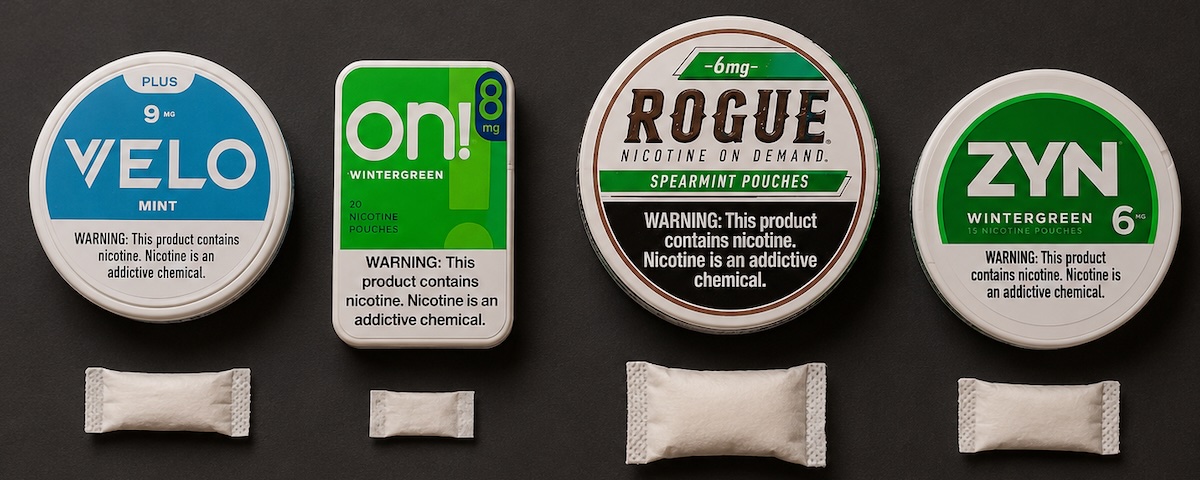
Nicotine Pouch Formats compared. From left to right: Velo Plus (slim), on! (mini), Rogue (regular), ZYN (slim)
| Format | Typical Dimensions | Typical Fill Weight | Main Benefits | Example Brands |
|---|---|---|---|---|
| Mini | About 20–28 mm long and 8–13 mm wide | About 0.3–0.5 gram | Maximum discretion, minimal lip bulge and potentially quicker initial satisfaction | on!; ZYN Mini in markets where it is available |
| Slim | About 30–35 mm long and 10–14 mm wide | About 0.5–0.8 gram | Discreet elongated fit with more filler and potentially longer flavor than a mini pouch | ZYN, Zone, on! PLUS and Rogue Max |
| Regular | About 30–35 mm long and 13–16 mm wide | About 0.8–1.1 grams | Fuller mouthfeel, larger flavor reservoir and longer sessions | Rogue and other products described as large or full-size pouches |
| Maxi | As much as 35–40 mm long and 15–18 mm wide | About 1.2–1.6 grams | Maximum filler capacity and potentially the longest-lasting flavor | Siberia All White Maxi and other specialty European products |
Note: Dimensions and weights vary significantly by brand. A manufacturer may also use one name for a pouch that another manufacturer would place in a different category.
Mini Nicotine Pouches
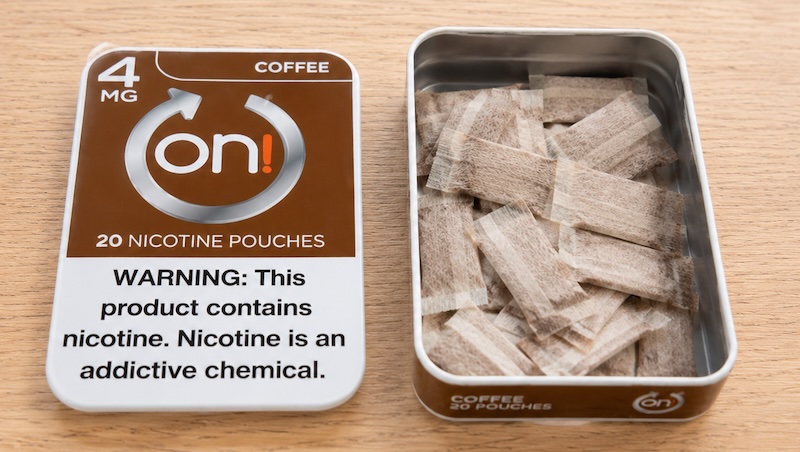
The mini nicotine pouch format (on! brand).
Mini pouches are the smallest format. They are generally shorter and narrower than other pouches, with around 0.3–0.5 gram of filler. The exact dimensions vary, but a typical mini pouch is somewhere around 20–28 mm long.
The most obvious advantage is discretion. A mini pouch produces very little bulge under the lip, making it a good option when you do not want anyone to notice that you are using a pouch. It can also be more comfortable if you have limited space between your lip and gum or simply dislike the stuffed feeling of a larger portion.
Classic on! pouches are probably the clearest mini-format example for US buyers. The pouches have a compact, rectangular shape and relatively dry texture. ZYN also sells mini pouches in certain international markets, although the familiar US ZYN pouch is generally described as a slim format instead.
Do Mini Pouches Release Nicotine More Quickly?
Many size guides claim that larger pouches release nicotine more quickly because a greater surface area touches the inside of your mouth. That explanation sounds logical, but it has not matched my experience.
When two pouches contain the same amount of nicotine, I often find that the smaller one provides quicker satisfaction. My theory is that there simply is not much filler material inside a mini pouch. Saliva can saturate that small amount of material quickly, allowing the dissolved nicotine and flavor to begin leaving the pouch without much delay.
A larger pouch contains a much deeper reservoir of filler. Even though more of the pouch may touch the gum, there is also considerably more material to hydrate. In my experience, that tends to spread both the nicotine and flavor over a longer period.
This does not mean that every mini pouch is fast or every large pouch is slow. Moisture, pH, nicotine concentration, pouch material and filler composition can all outweigh the effect of size. However, I would not automatically choose a large pouch because a guide claims that greater surface area always creates a quicker hit.
If the nicotine strength is equal, I generally recommend trying a smaller pouch when you want quicker satisfaction and a larger pouch when you want a slower, longer-lasting experience.
Benefits of Mini Pouches
- Extremely discreet under the lip
- Good for people who find larger pouches uncomfortable
- Easy to position without creating much lip bulge
- Can provide relatively quick satisfaction despite the small contact area
- Often available in lower nicotine strengths
Potential Drawbacks
- Usually does not hold as much flavoring material
- Flavor may fade sooner than it does with a larger pouch
- Some dry mini pouches can initially feel stiff or slightly rough
- The pouch may move around more if you have a lot of space under your lip
Slim Nicotine Pouches
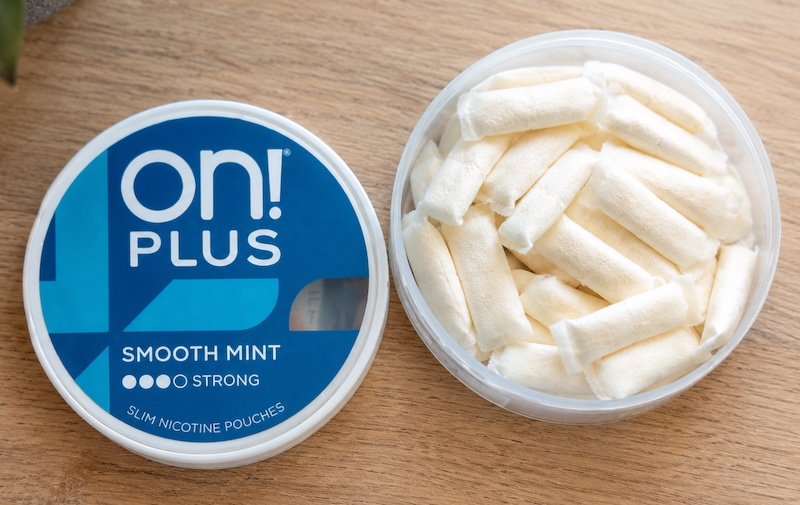
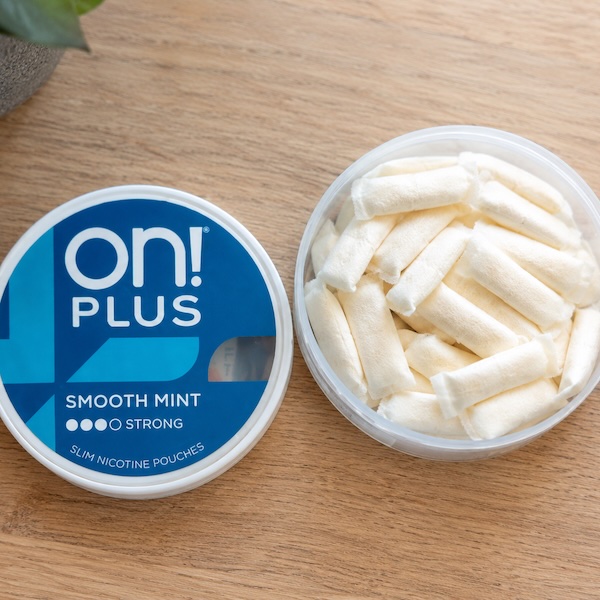
The slim nicotine pouch format (on! Plus brand).
Slim is probably the most common modern nicotine pouch format. A slim pouch is longer than a mini pouch but remains narrow, allowing it to follow the natural shape of the gumline. Typical weights range from around 0.5–0.8 gram.
For many users, slim pouches provide the best balance between discretion and endurance. They hold more filler than mini pouches and can provide longer-lasting flavor, but they usually avoid the pronounced bulge associated with traditional full-size portions. Some of the most popular pouch brands are in the slim format, such as ZYN, on! Plus, Zone and Rogue Max.
It is worth paying attention to the moistness of a pouch brand — which I’ll discuss in a moment — because two pouches described as slim may behave very differently. A dry ZYN-style pouch and a soft, moist on! PLUS pouch may have broadly similar proportions, but their initial flavor, mouthfeel and release pattern will not necessarily be alike.
Benefits of Slim Pouches
- Long, narrow shape fits naturally along the gumline
- More discreet than a plump regular pouch
- Usually lasts longer than a mini pouch
- Large selection of brands, flavors and nicotine strengths
- Available in both dry and moist formulations
Potential Drawbacks
- The longer pouch may be noticeable if positioned too close to the front of the mouth
- Some slim pouches become bulky as they absorb saliva
- The term “slim” does not tell you whether a pouch is moist, dry, light or heavily filled
Regular Nicotine Pouches
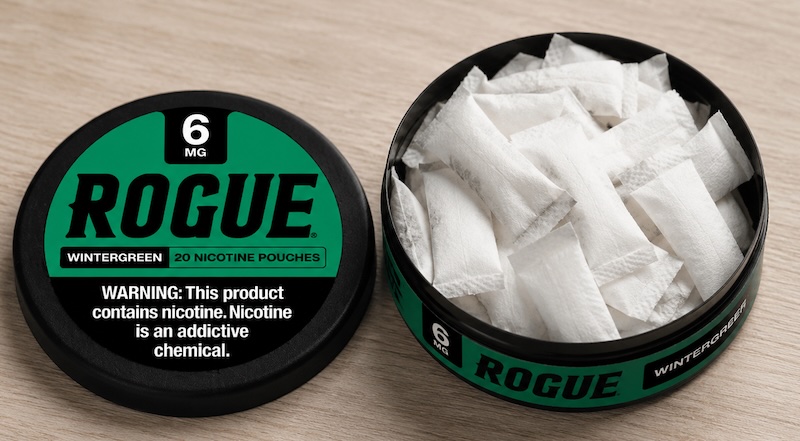
The regular nicotine pouch format (Rogue brand).
Regular pouches — also called normal, large or full-size pouches — are usually about as long as slim portions but are noticeably wider and plumper. They commonly contain around 0.8–1.1 grams of filler.
Standard Rogue pouches are a good current example; they’re some of the plumpest and longest-lasting pouches available in the US today. The Rogue brand is also particularly useful for illustrating why format and nicotine strength need to be considered separately: the larger original Rogue pouches are available in lower strengths than the slim Rogue Max range.
A regular pouch takes up more room under the lip and is not as discreet as a mini portion. In exchange, it provides a fuller mouthfeel and has more filler available to hold nicotine, sweeteners and flavoring ingredients.
I tend to prefer this format when flavor endurance matters more than invisibility. A good regular pouch can keep producing noticeable flavor long after a small pouch has started tasting like a damp napkin.
Benefits of Regular Pouches
- More filler for sustained flavor
- Often provides a slower, steadier experience
- Stays securely in place for many users
- Good for longer pouch sessions
- Fuller mouthfeel may appeal to former snus or dipping-tobacco users
Potential Drawbacks
- More visible under the lip
- May feel too bulky for new pouch users
- Can produce more pressure against one area of the gum
- May take longer to become fully hydrated if it is a dry formulation
Maxi Nicotine Pouches
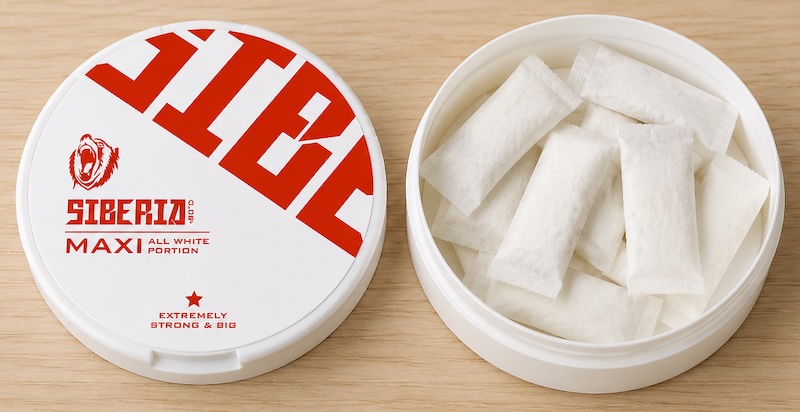
The maxi nicotine pouch format (Siberia brand).
Maxi is the largest pouch format. These pouches can contain around 1.2–1.6 grams of material, although a few products are even heavier. Maxi pouches are much less common in the United States than mini, slim and regular formats. They’re much more common in Europe, where nicotine pouches are quickly replacing traditional tobacco-based snus.
Maxi pouches are more likely to appear among European all-white products and traditional portion-snus ranges. Siberia All White Maxi is one example, although it is an extremely high-strength specialty product and is not representative of the nicotine level that an average user should choose.
The appeal of the format is endurance. A maxi pouch can hold a great deal of filler and flavoring material, potentially supporting a long session with a gradual release. The obvious tradeoff is that you definitely won’t be able to hide it under your lip.
I would consider a maxi pouch only if you use oral tobacco products and already know that you enjoy a very full mouthfeel.
Benefits of Maxi Pouches
- Maximum capacity for filler and flavoring material
- Potentially very long-lasting flavor
- Can provide a gradual, sustained experience
- May appeal to experienced users accustomed to large snus portions
Potential Drawbacks
- Least discreet format
- Can feel uncomfortably bulky
- Rare in the United States
- Nicotine strengths are often much too high for most people
Moist vs. Dry Nicotine Pouches
Pouch size tells only half of the story. Moistness can be just as important, and it affects everything from the initial burst of flavor to the amount of saliva the pouch produces.
There is no single moisture percentage that officially separates a dry pouch from a moist one. Products exist along a spectrum, and manufacturers may describe them as dry, moist, soft, pre-moistened or pre-primed.
Moist Nicotine Pouches
A moist pouch already contains enough water or humectant to begin dissolving its ingredients almost immediately. It does not need to absorb as much saliva before nicotine and flavor can move through the pouch material.
As a result, moist pouches usually provide a faster initial release of flavor. They often feel softer under the lip as well. Some of the most popular moist pouch brands include on! PLUS, Rogue Max and FRE.
Moist pouches may also produce more drip, especially if you move the pouch around or leave it in place for a long time. Because their ingredients begin dissolving promptly, some moist pouches deliver a strong opening burst but lose flavor sooner.
Moist Pouch Advantages
- Fast initial flavor
- Soft, flexible mouthfeel
- Requires less saliva to activate
- May feel more immediately noticeable
Moist Pouch Drawbacks
- Can cause excess saliva production
- Initial nicotine release may be overwhelming
- May lose flavor more quickly after a strong start
- Can dry out if the can is left open
Dry Nicotine Pouches
Dry pouches contain little surface moisture and must absorb saliva before their ingredients can dissolve. Classic on! is a good example of a small, dry pouch.
Dry pouches are usually praised for their low drip and long shelf stability. They may initially feel firm or scratchy, but they soften as they absorb moisture.
The standard explanation is that dry pouches should always release nicotine more slowly. That is a reasonable general expectation, but real products do not always cooperate. Laboratory comparisons have found major differences between brands, with some relatively dry products releasing nicotine faster than certain wetter ones.
That makes sense because moisture is only one variable. A small dry pouch may hydrate very quickly, especially if it contains highly soluble ingredients, fine filler particles, permeable pouch material and an effective pH-adjusting system.
Dry Pouch Advantages
- Very little drip
- Discreet and tidy to use
- Often provides a controlled flavor experience
- Generally less vulnerable to drying out after the can is opened
Dry Pouch Drawbacks
- Can initially feel firm or papery
- May take time to soften
- Flavor can seem muted during the first few minutes
- Performance depends heavily on your saliva production
What Are pH Adjusters in Nicotine Pouches?
Many nicotine pouches contain a pH adjuster, which may also be listed as an acidity regulator. Common examples include sodium carbonate and sodium bicarbonate.
These ingredients do not add more nicotine to the pouch. Instead, they change the chemical environment surrounding the nicotine.
Nicotine can exist in protonated and unprotonated forms. The unprotonated form, commonly called free nicotine or free-base nicotine, passes through the lining of the mouth more readily. Raising the pH generally increases the proportion of nicotine in that readily absorbable form.
In plain English, two pouches can contain the same total number of milligrams but feel very different if one creates a more alkaline environment. The pouch with the higher effective pH may provide quicker or more intense satisfaction because a greater proportion of its nicotine is available for absorption.
A lower-pH formulation generally keeps more nicotine in its protonated form, potentially creating a slower or milder experience. Your saliva also matters because it dilutes the pouch contents and has its own pH and buffering capacity.
This is another reason why judging a pouch solely by its size or labeled nicotine content is unreliable. A compact 6 mg pouch with an aggressive pH-adjusting system may feel stronger than a large 6 mg pouch with a different formulation.
What Really Controls Nicotine Release?
The speed and duration of a nicotine pouch are produced by several interacting factors:
- Nicotine per pouch: The total amount of nicotine contained in one portion.
- Nicotine concentration: How much nicotine is present relative to the weight of the filler.
- Pouch size: The pouch’s dimensions and the amount of material it contains.
- Moisture: How much hydration is already present before use.
- pH: The proportion of nicotine available in its more readily absorbable form.
- Filler composition: The type, density and particle size of the cellulose or other material inside the pouch.
- Pouch material: The thickness, pore size and permeability of the outer fabric.
- Solubility: How readily the nicotine, sweeteners and flavoring ingredients dissolve.
- Your mouth: Saliva production, placement and individual sensitivity all affect the result.
A 2026 laboratory comparison illustrates the problem with simple rules. ZYN, on! and Rogue were among the faster-releasing products tested, while several other dry and wet products released nicotine more slowly. That does not prove that smaller pouches are always faster, and laboratory dissolution is not identical to using a pouch in the real world. It does show that overall formulation is more important than one isolated feature such as size or moisture.
Milligrams per Pouch vs. Milligrams per Gram
Pouch format also matters when you compare nicotine-strength labels. Some products display nicotine in milligrams per pouch, while others display milligrams per gram.
Milligrams per pouch is usually the more useful number because it tells you how much nicotine is contained in the portion you are actually using.
Milligrams per gram describes concentration. To determine the nicotine per pouch, you must multiply that concentration by the weight of one pouch.
For example, a mini pouch weighing 0.4 gram and containing 10 mg/g has 4 mg of nicotine:
10 mg/g × 0.4 g = 4 mg per pouch
A regular pouch weighing 1 gram at the same concentration would contain 10 mg. The concentration is identical, but the actual amount in each pouch is not even close.
Always check which measurement a manufacturer is using before comparing two cans. A very large number on the label may look alarming until you realize that it refers to an entire gram rather than one pouch. Conversely, a heavy maxi pouch can contain much more nicotine than expected even when its mg/g rating looks moderate.
Nicotine pouch strengths are almost always measured in mg per pouch in the United States. The mg per gram measurement is more common in Europe.
Which Nicotine Pouch Format Should You Choose?
Choose a mini pouch when discretion and quick satisfaction are your priorities. It is also the best starting format if you find ordinary pouches too bulky.
Choose a slim pouch when you want a balanced option. Slim pouches generally provide more endurance than mini portions without creating an obvious bulge.
Choose a regular pouch when you value long-lasting flavor and do not mind a fuller feeling under your lip. At equal nicotine strengths, I generally find this format slower and more sustained than a mini pouch.
Choose a maxi pouch only when you specifically enjoy large portions and want the maximum amount of filler. Check the nicotine content carefully because many maxi products are designed for highly experienced users of traditional oral tobacco products.
For moisture, choose a moist pouch when you want immediate flavor and a soft texture. Choose a dry pouch when low drip, discretion and a more controlled start matter most.
Most importantly, do not assume that format automatically determines strength. Start with a nicotine level appropriate for your existing tolerance, especially when trying an unfamiliar brand. You can always move to a stronger product later. Discovering that a pouch is too strong while it is already parked under your lip is really not the way that you want to experience nicotine pouches.
Frequently Asked Questions
What is the smallest nicotine pouch format?
Mini is generally the smallest format. Mini pouches typically weigh around 0.3–0.5 gram and create very little visible bulge under the lip. Classic on! is a popular US example.
What is the most common nicotine pouch format?
Slim is currently one of the most widely available formats. Popular brands such as ZYN and Zone use elongated pouches that provide a discreet fit while holding more filler than a typical mini pouch.
Do larger nicotine pouches release nicotine faster?
Not necessarily. A larger pouch touches more of the mouth, but it also contains more filler that must become hydrated. In my experience, smaller pouches often provide quicker satisfaction, while larger pouches release their nicotine and flavor over a longer period. Moisture, pH, nicotine concentration and pouch construction can be more important than size alone.
Are moist nicotine pouches stronger than dry pouches?
Moist pouches often provide faster initial flavor and may begin releasing nicotine sooner because their ingredients are already hydrated. That does not automatically make them stronger. A dry pouch with more nicotine, a higher pH or a more soluble formulation may still feel considerably more intense.
Why do nicotine pouches contain sodium carbonate or sodium bicarbonate?
These ingredients act as pH adjusters. By creating a more alkaline environment, they can increase the proportion of nicotine in the unprotonated form that passes through the lining of the mouth more readily.
Does a dry pouch always last longer?
No. Dry construction may delay the initial release, but flavor duration also depends on pouch size, filler quantity, flavor formulation and solubility. A heavily filled moist pouch can outlast a small dry one, while another moist pouch may provide a powerful opening burst and fade quickly.
Can I cut a large nicotine pouch in half?
No. Cutting a pouch can spill the filler into your mouth and makes the nicotine dose difficult to control. Also, trust me when I say that the powder from a nicotine pouch is not something that you’ll enjoy having in your mouth. Choose a smaller format or lower strength instead.
Are maxi pouches suitable for beginners?
Almost definitely not. Maxi pouches are bulky, and many products using that format contain extremely high nicotine levels. New pouch users are generally better served by a mini or slim pouch in a lower strength. Maxi pouches are usually only appropriate for experienced users of traditional oral tobacco products.
Final Thoughts
Pouch format is about much more than comfort. The amount of filler inside a pouch can influence how quickly it becomes saturated, how long its flavor lasts and how steadily it releases nicotine.
Mini pouches offer maximum discretion and, in my experience, can provide surprisingly quick satisfaction. Slim pouches occupy the practical middle ground. Regular and maxi pouches hold more filler and generally make more sense when you want a slower, longer-lasting session.
Moistness and pH complicate the picture further. Moist pouches are already activated and often start quickly, while dry pouches depend more heavily on saliva. pH adjusters can substantially alter how readily nicotine is absorbed, which is why two products with identical milligram ratings can feel completely different.
The useful rule is not that larger always means faster or that moist always means stronger. The useful rule is that size, filler, moisture, pH and pouch material work together. Once you start paying attention to all of them, choosing the right pouch becomes much easier.


0 Comments